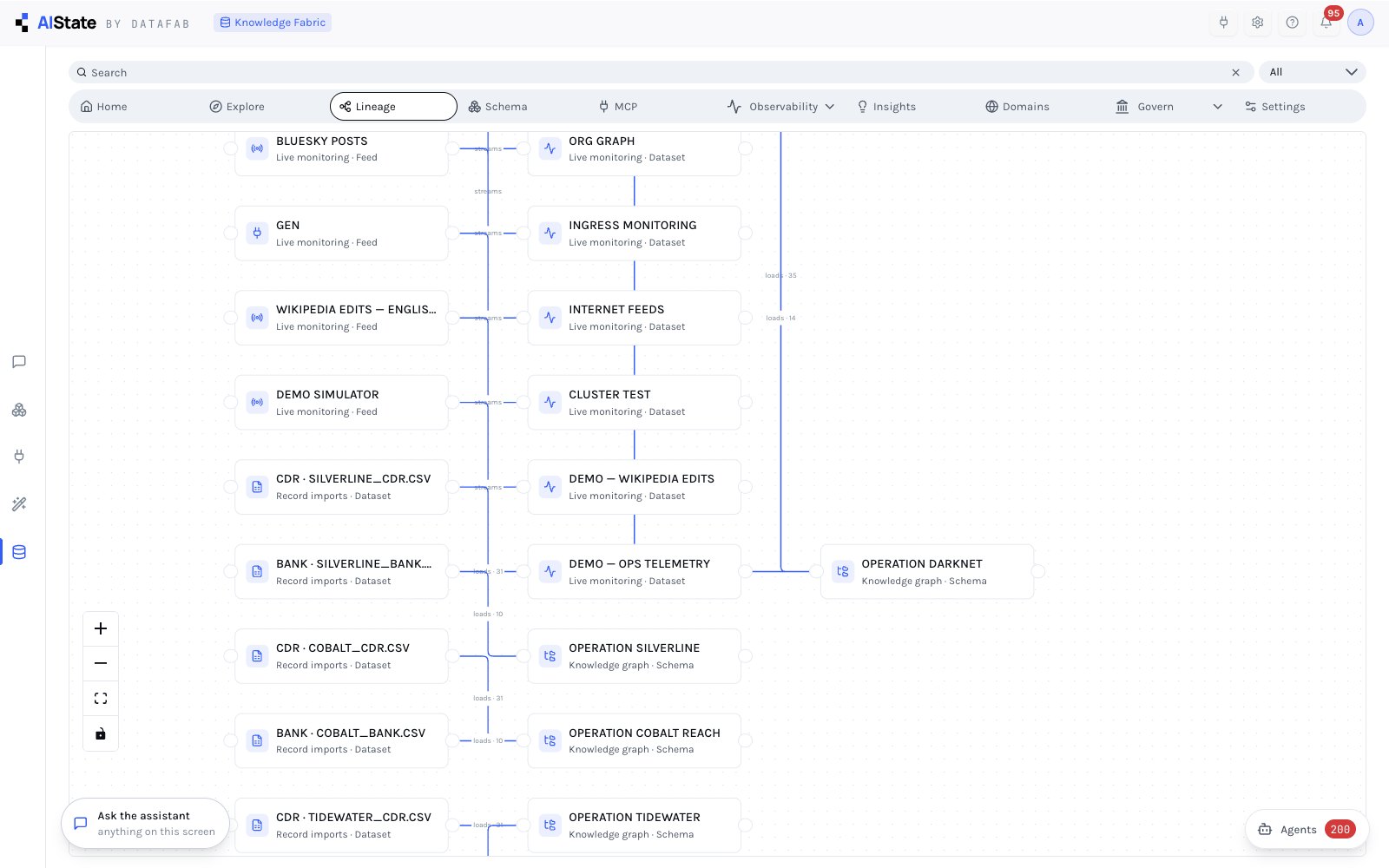
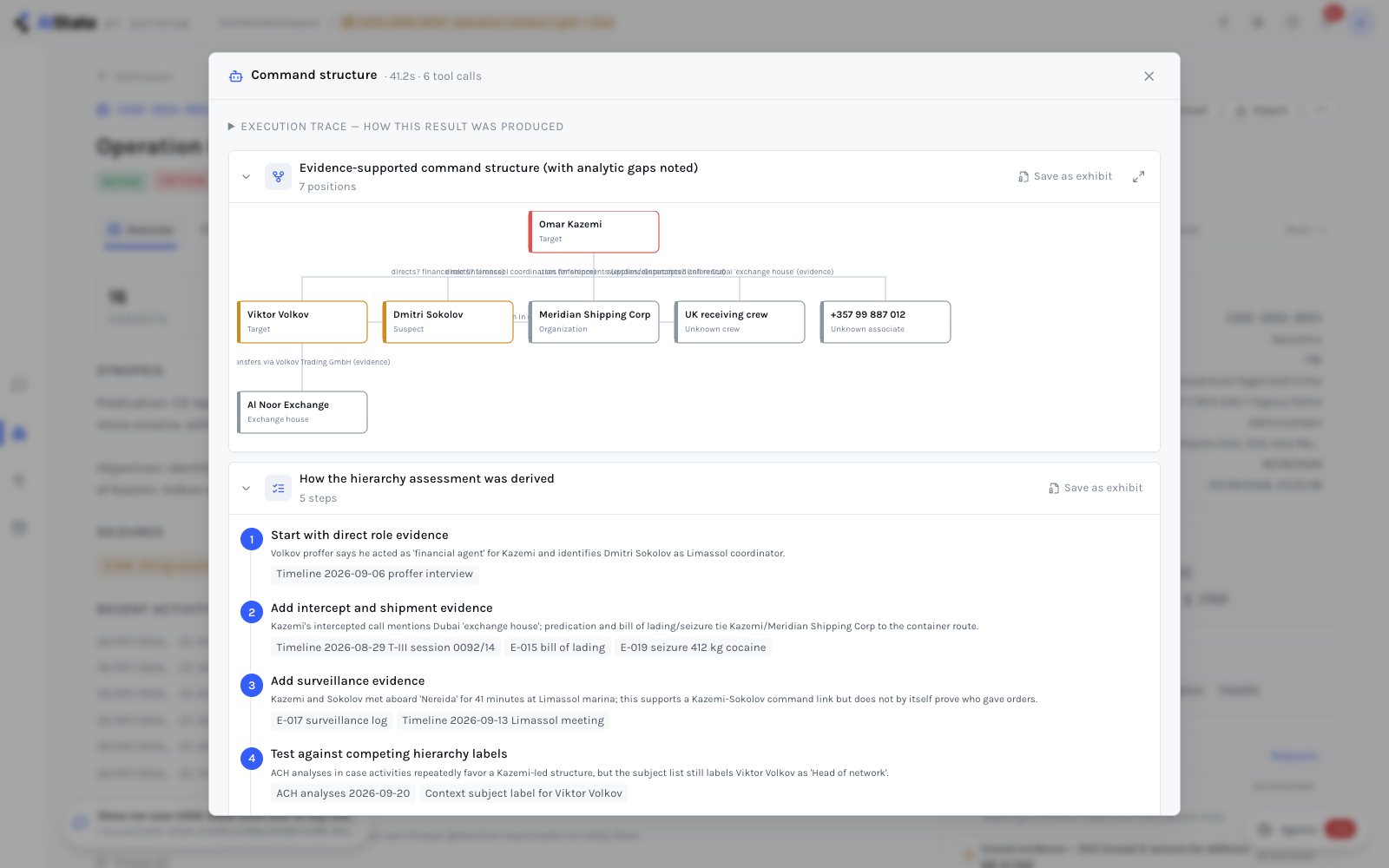
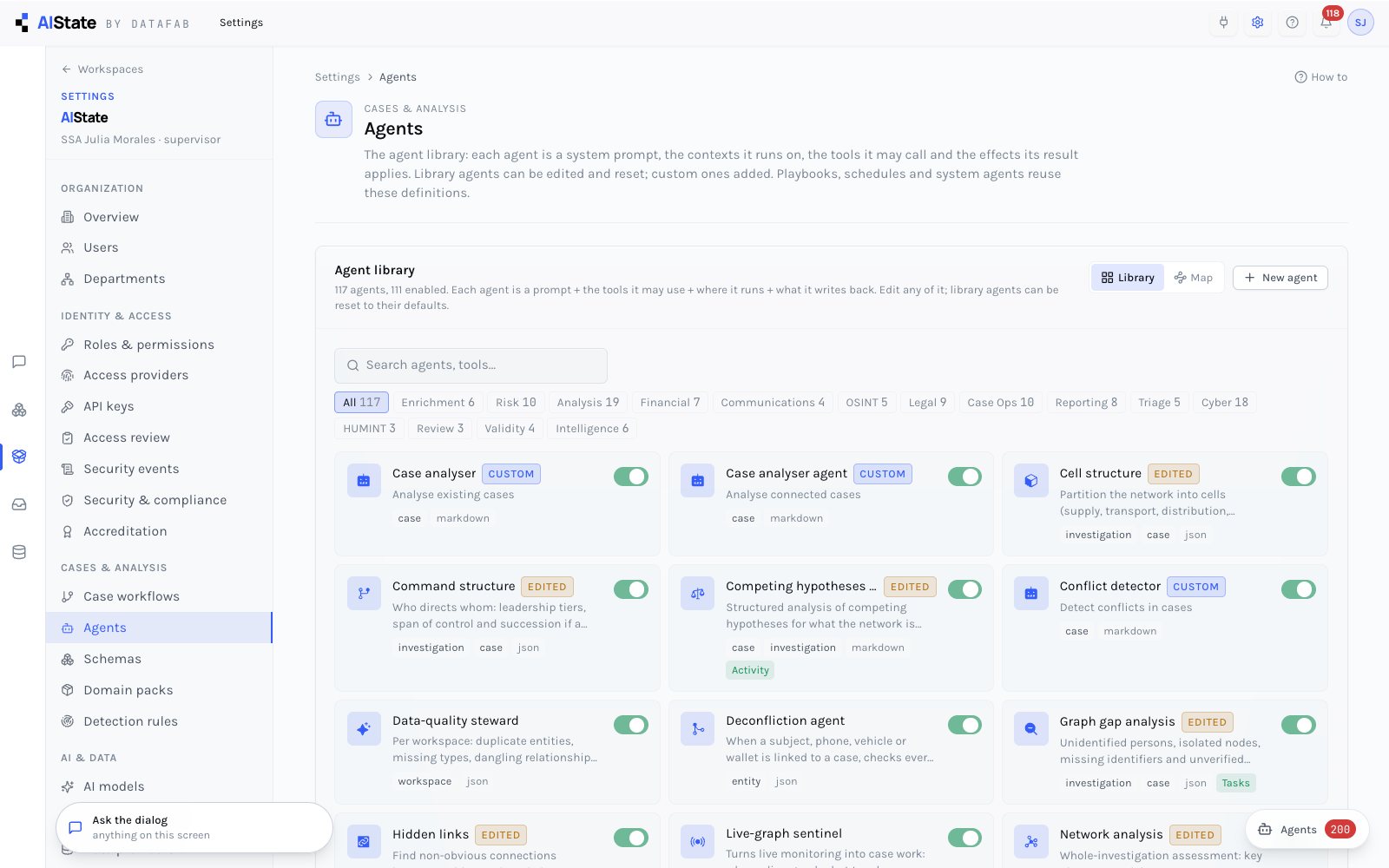
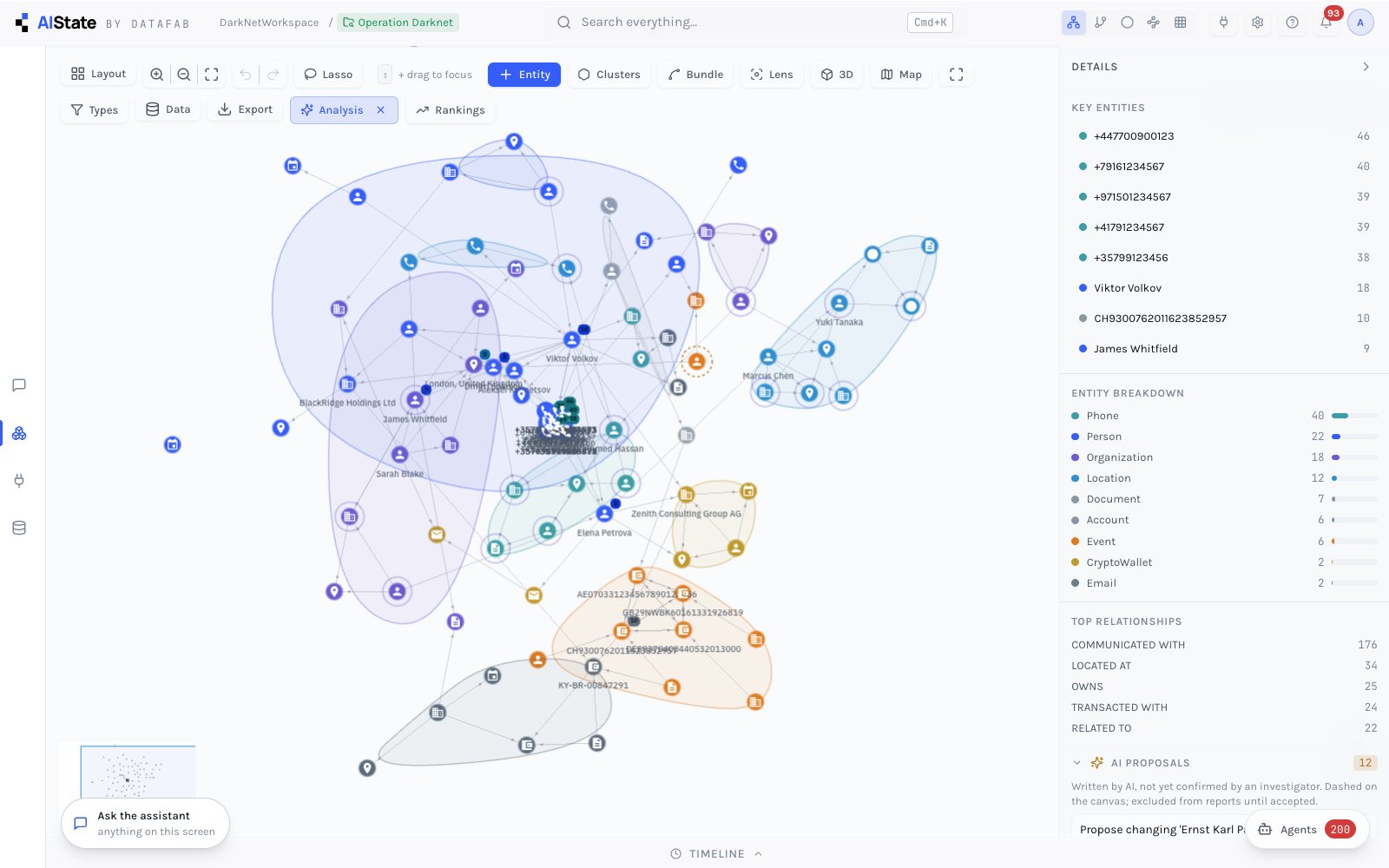
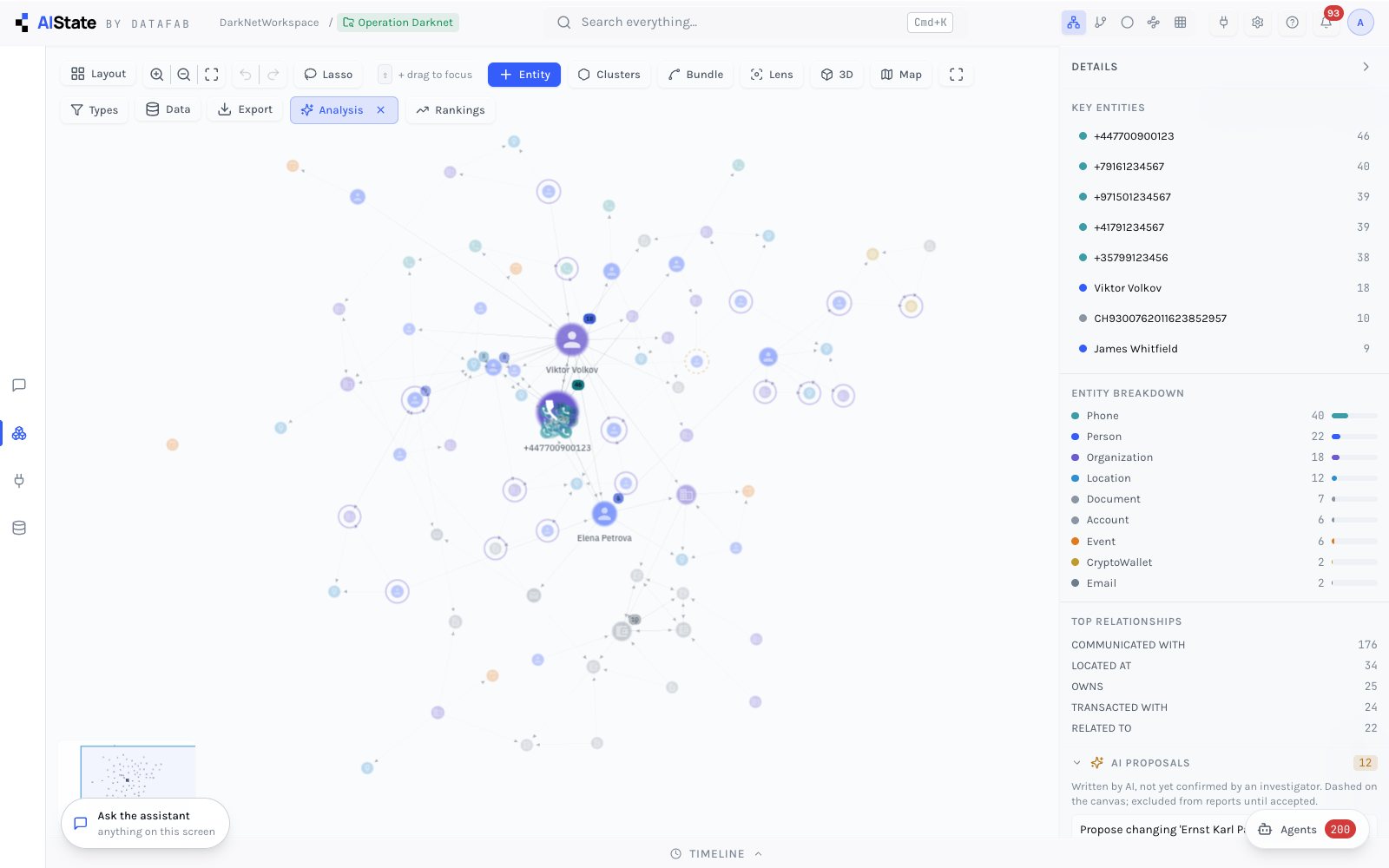
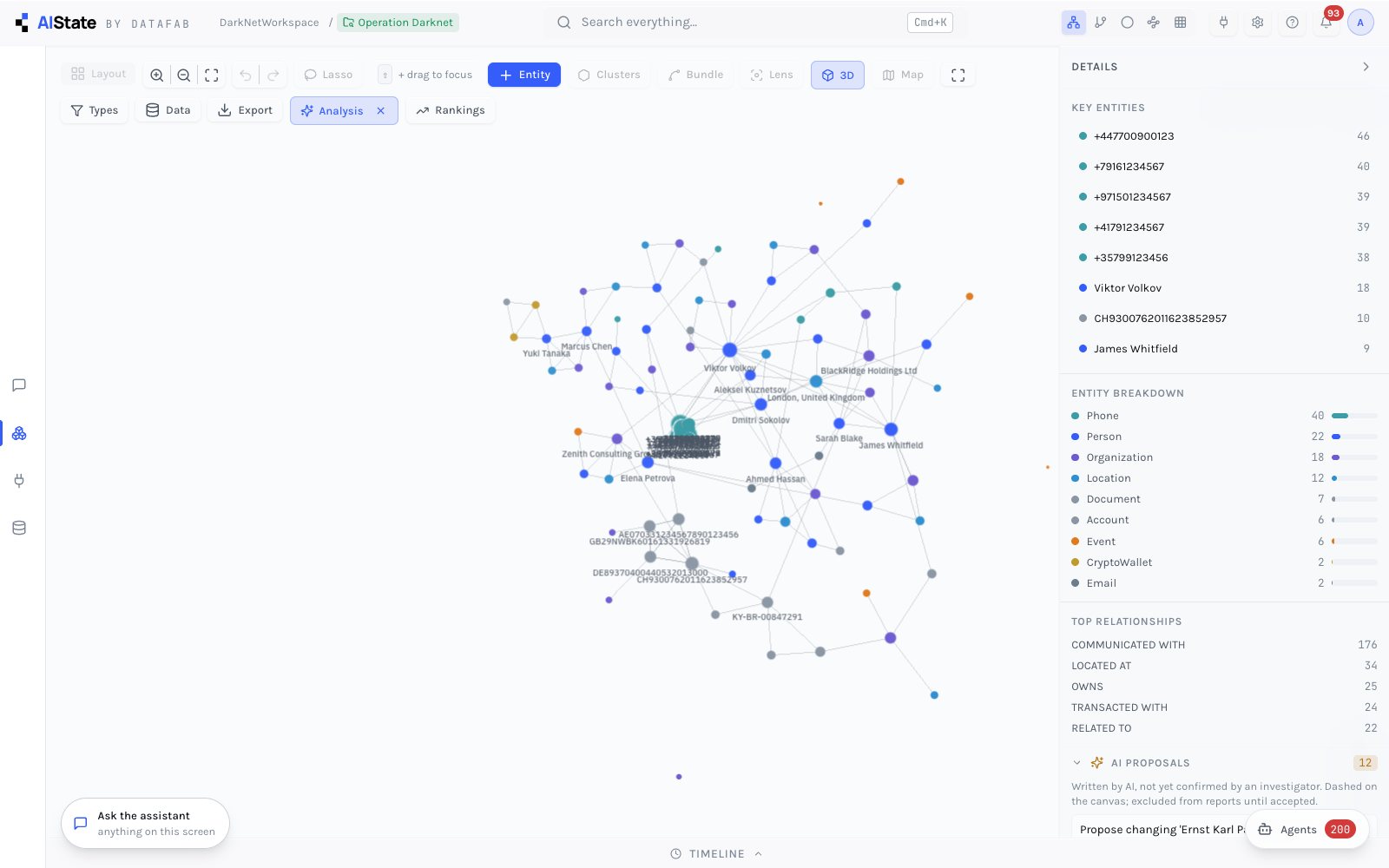
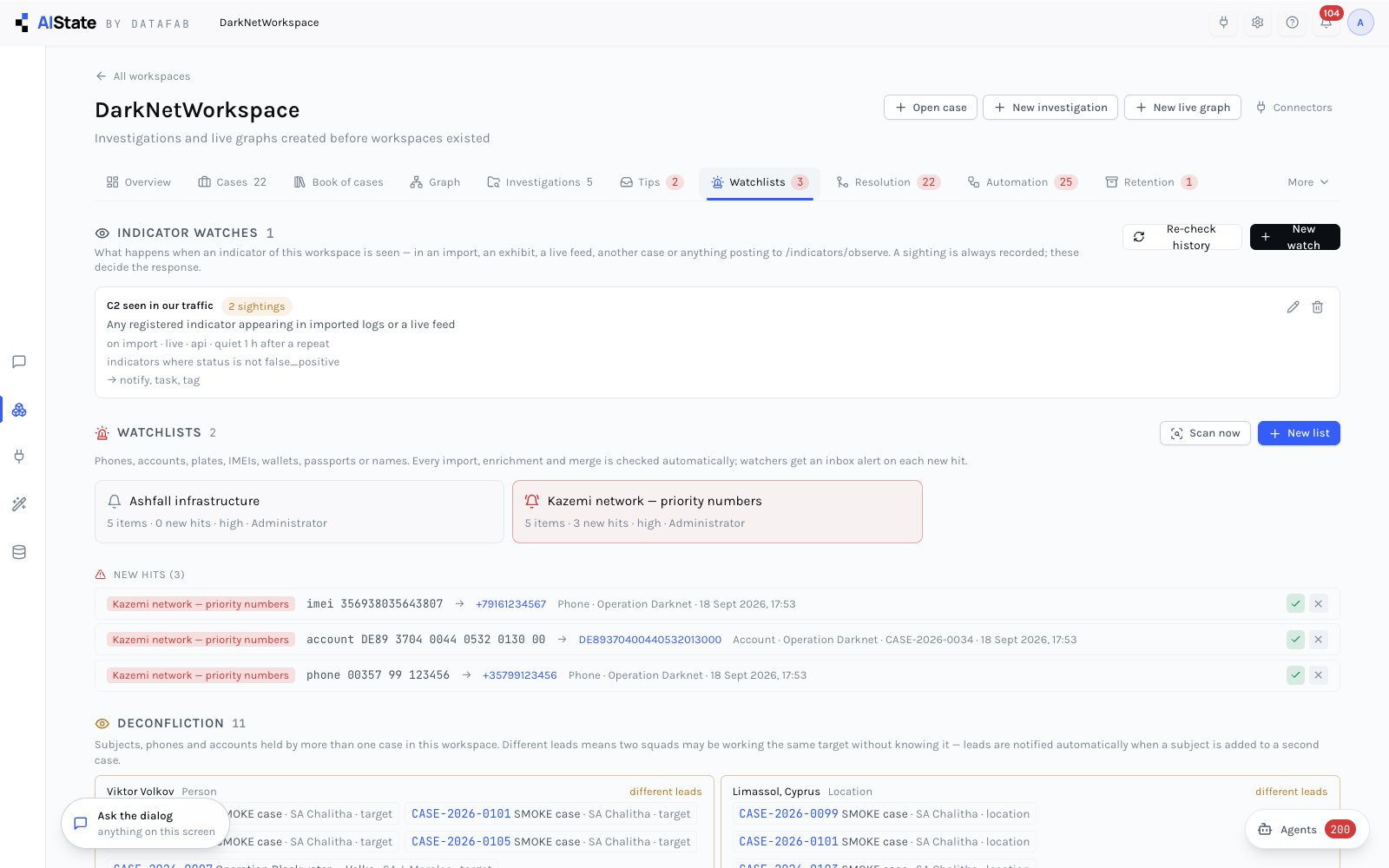
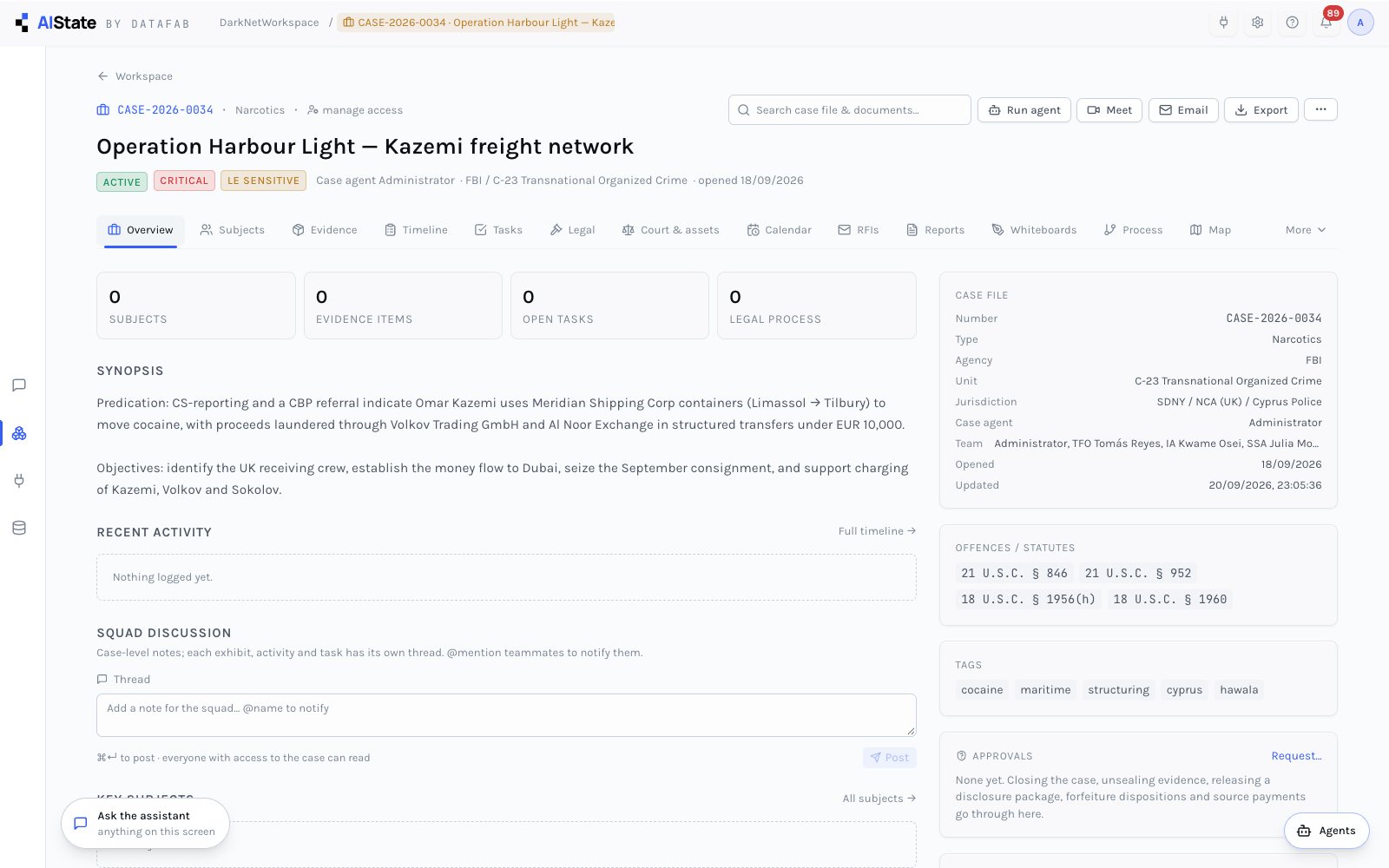
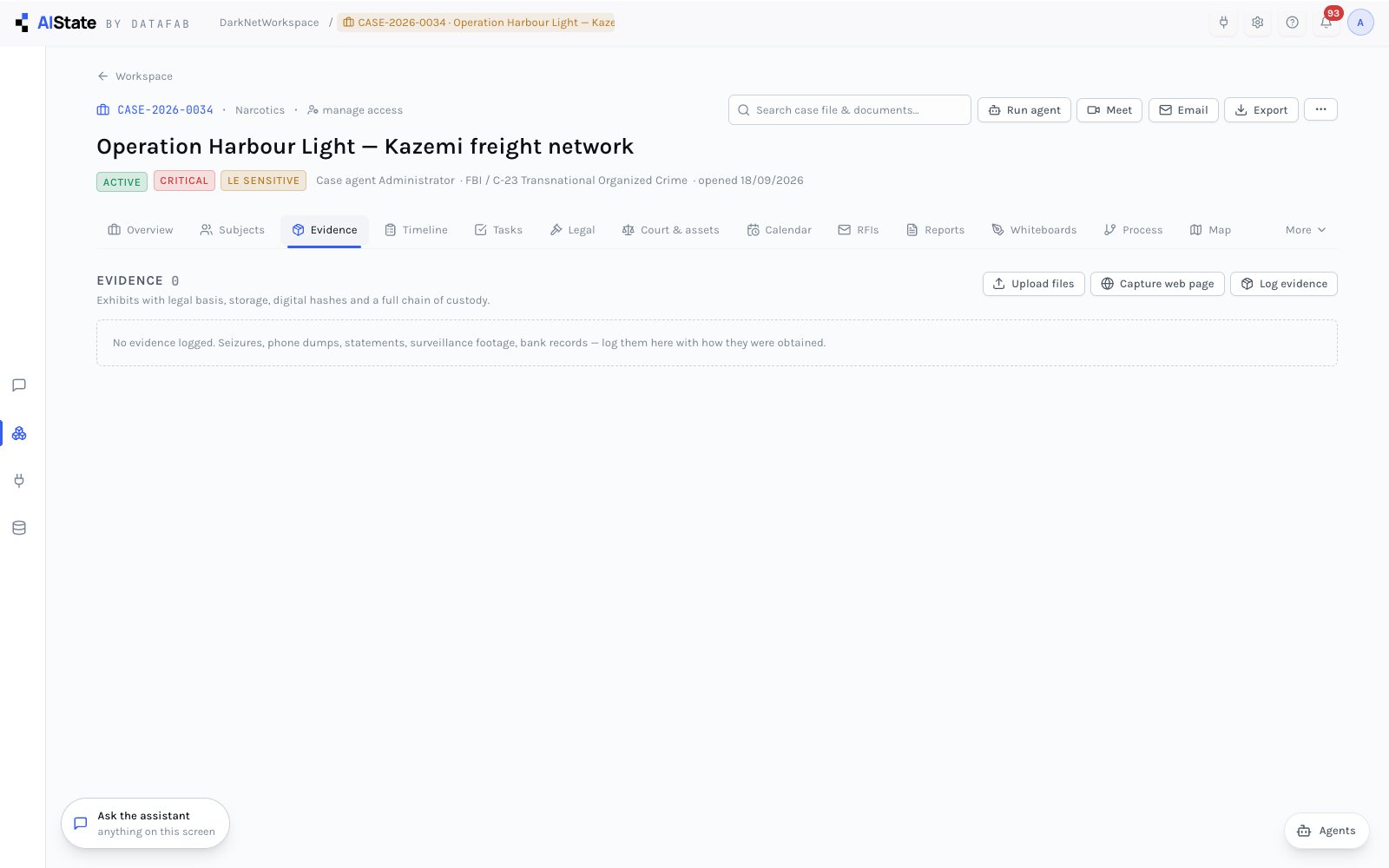
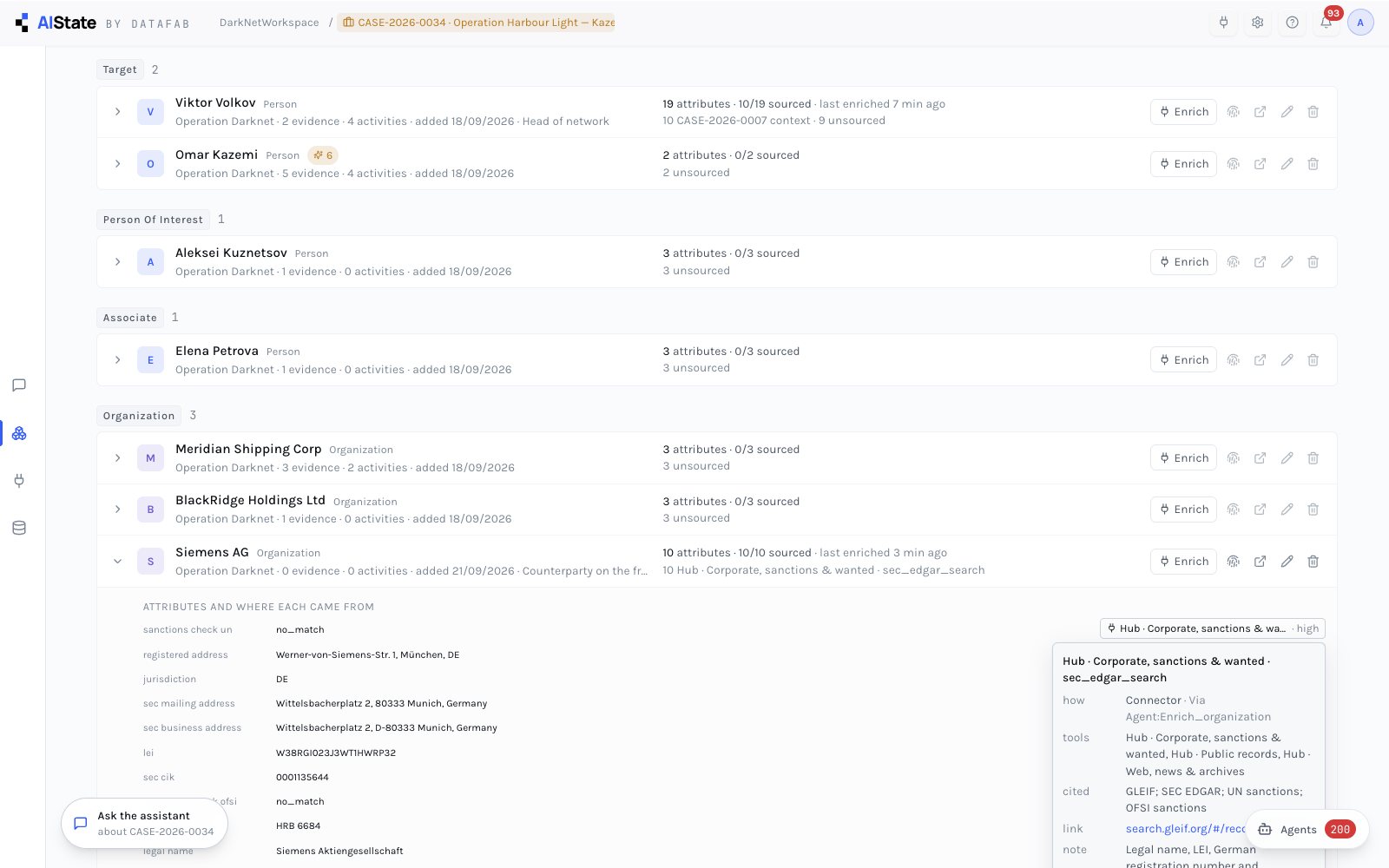
Three layers, one platform. 01 · the Knowledge Fabric resolves the estate in place. 02 · the Knowledge & Agentic Studio is where your people encode what they know — as agencies, chains and agentic widgets — to work on it under review. 03 · governed utilities are what the work looks like — the graph, cases and evidence, monitoring and reporting. Governance and your own infrastructure sit beneath all three.
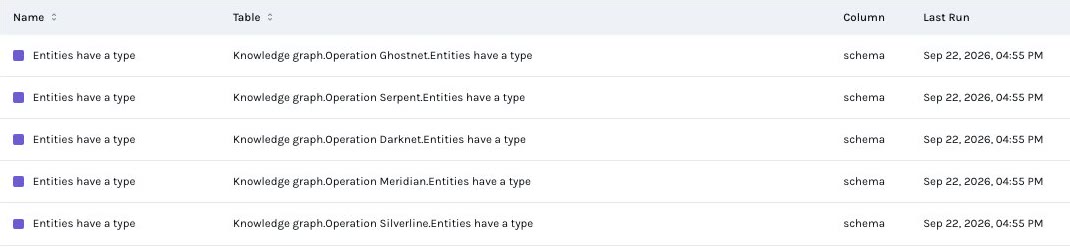
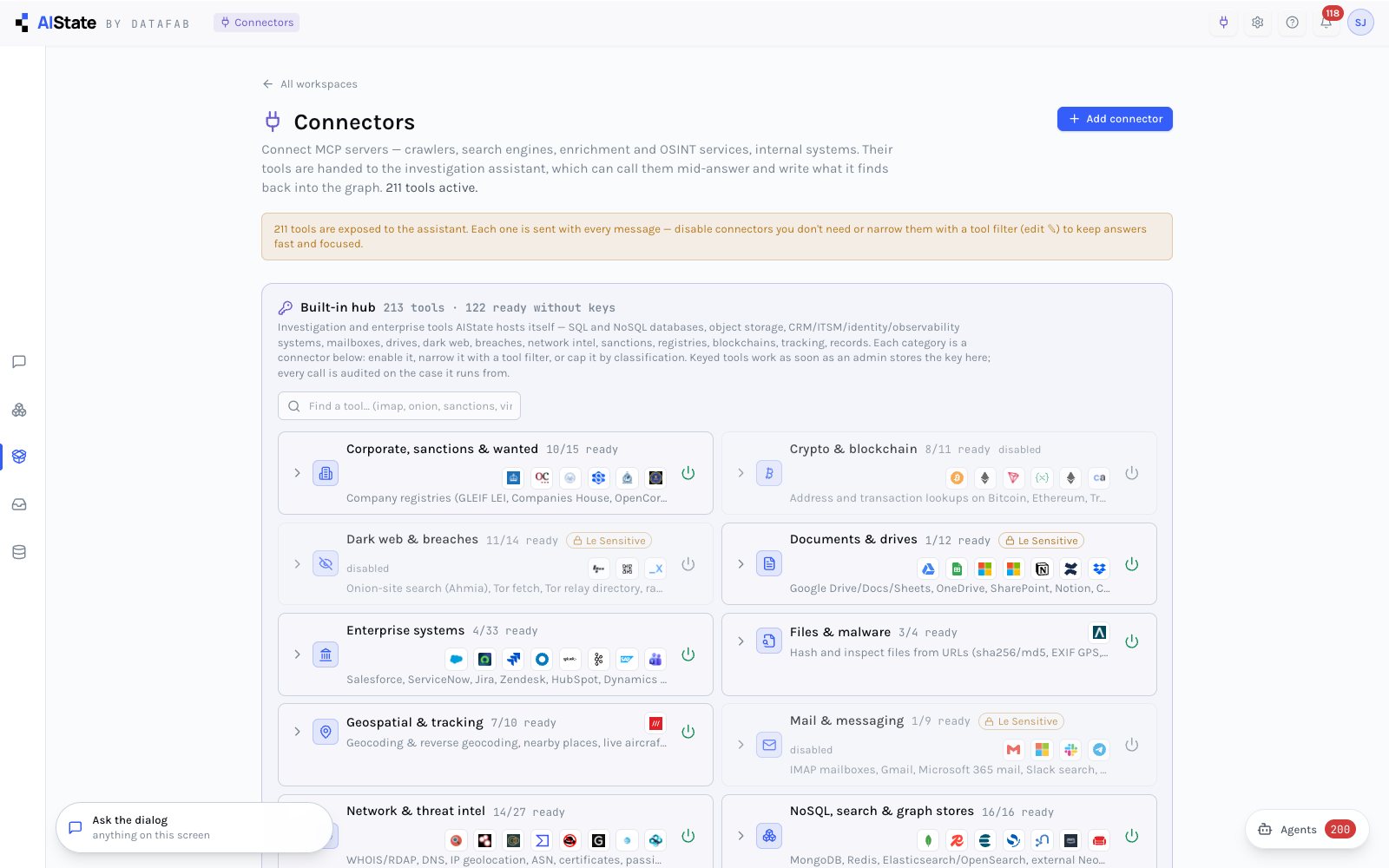
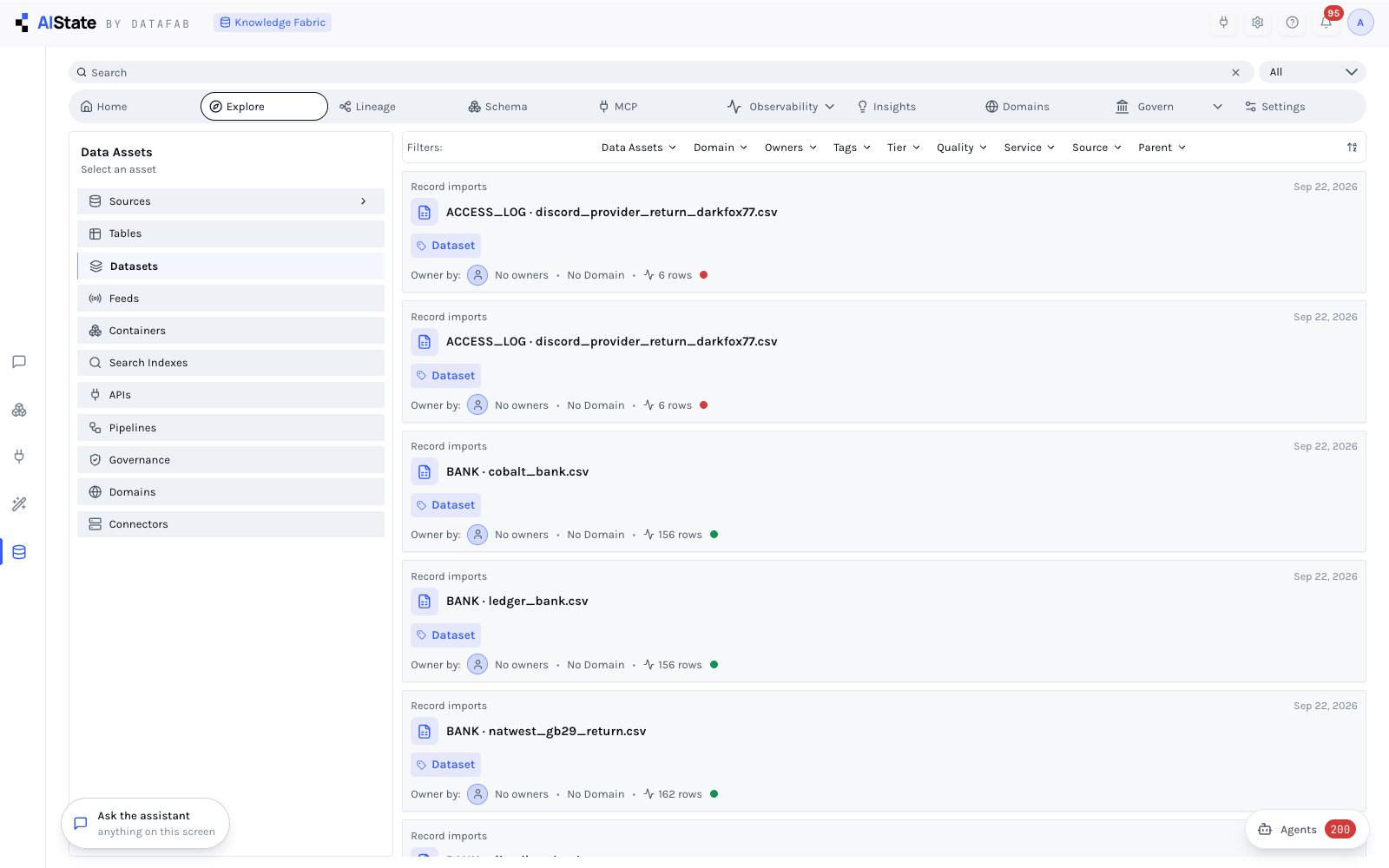
The estate catalogued and resolved in place — assets, schemas, lineage, quality, ontology, connectors.
Encode what your best people know as agencies, chains and agentic widgets; every write governed; every run traced.
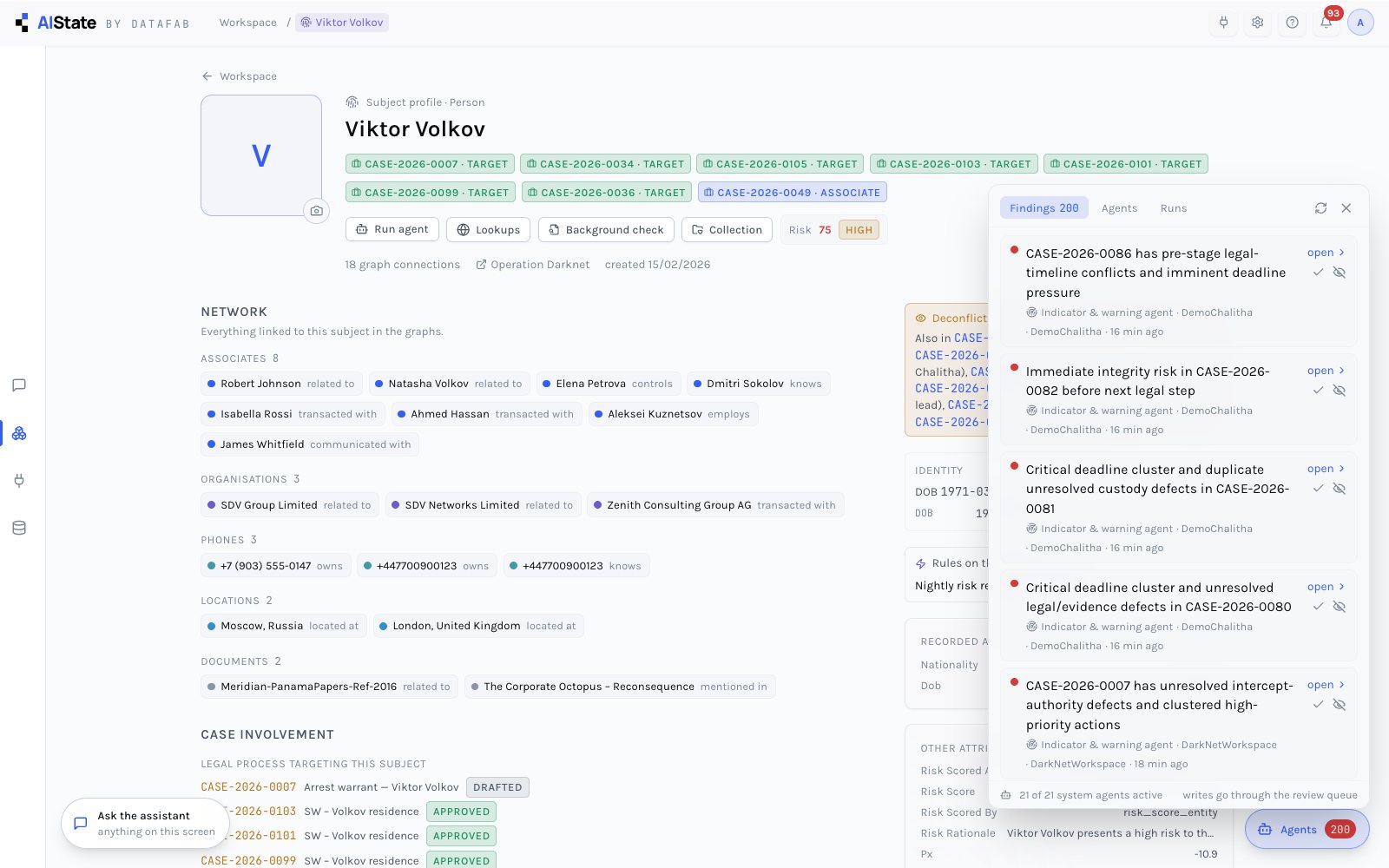
The graph, cases and evidence, monitoring and reporting — the work itself, with a hash-chained record behind it.
Permissions, clearance, case grants, data boundary, session lock, MFA and SSO, accreditation evidence — on storage, databases and keys you control, with the models you choose. Settings & controls →
A scheduled sync reads every asset in the platform and in the systems it is connected to, samples schemas, draws lineage, runs quality checks and snapshots the trend — nothing is catalogued by hand, and no rows leave those systems to build it. What those systems hold is then resolved into one knowledge graph: not a flat inventory of tables and columns but multi-dimensional objects carrying their relationships — explicit and inferred — each with its basis. Every screen reads from it. Identifiers, folded names and transliteration resolve the same person across systems into one graph; the rest is queued for a person.
How the Fabric works, screen by screen → · ▶ The IT-team walk-through


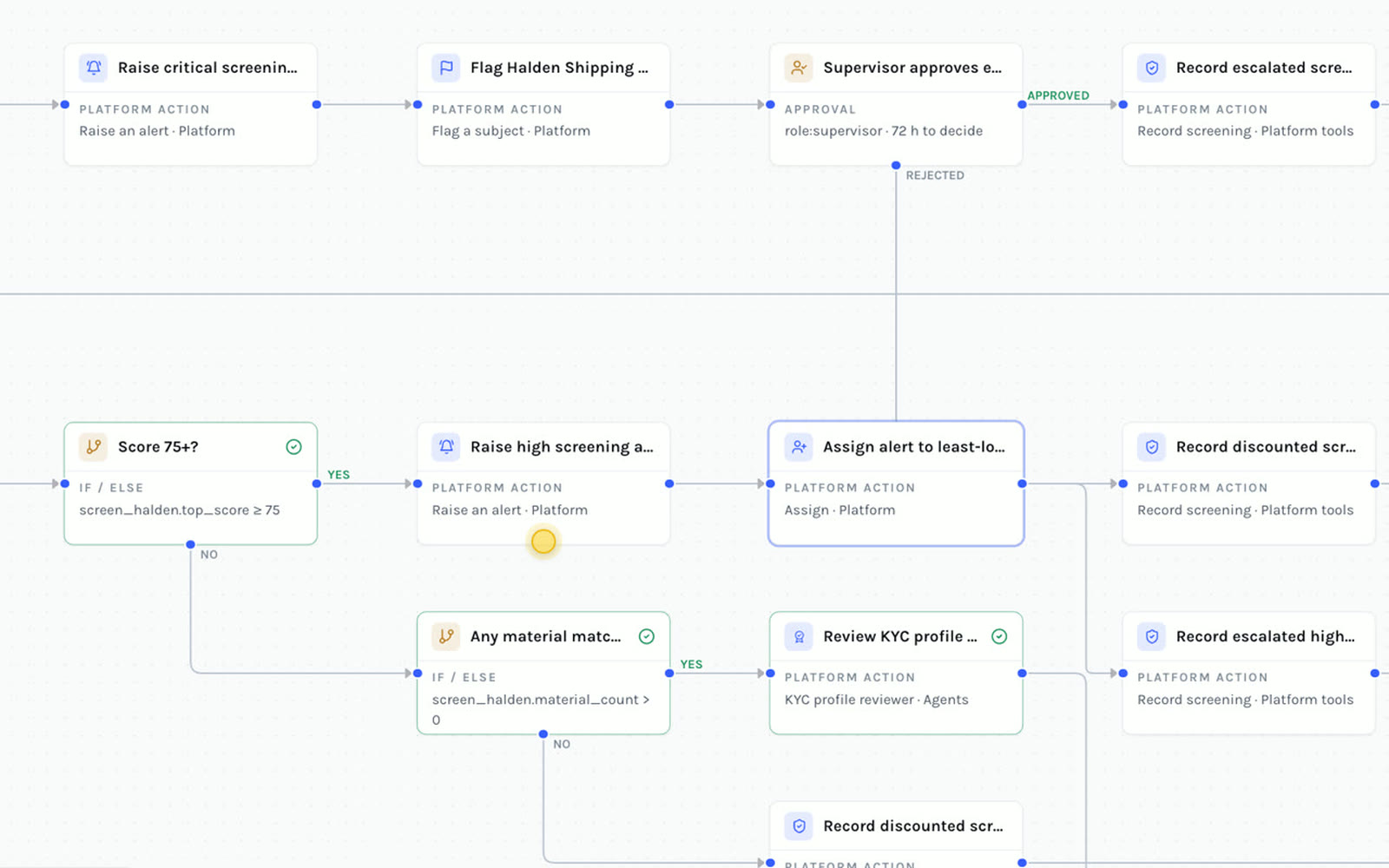
A bench of 105 agencies that already know the work — enrichment, risk, financial crime, cyber, OSINT, legal process, case operations, reporting — each with its own remit, the context it may read and the short list of things it is allowed to change. The Studio is where your own people add theirs: agencies that do one job well, chains that link them with conditions, parallel steps and approval steps, and agentic widgets that answer in place with a diagram, a table, a map or a live screen. Written in words, tested against a real target, then published.
What an agency actually is → · ▶ The Studio, end to end (9:14) · Agencies in the feature guide →
Investigation graphs render while they load, and positions persisted so a reload opens settled. Live graphs take streams, webhooks, MCP pushes and imports through visual pipelines and a recency window opens the latest slice and retention prunes inside your boundary, new events animate only their neighbourhood.


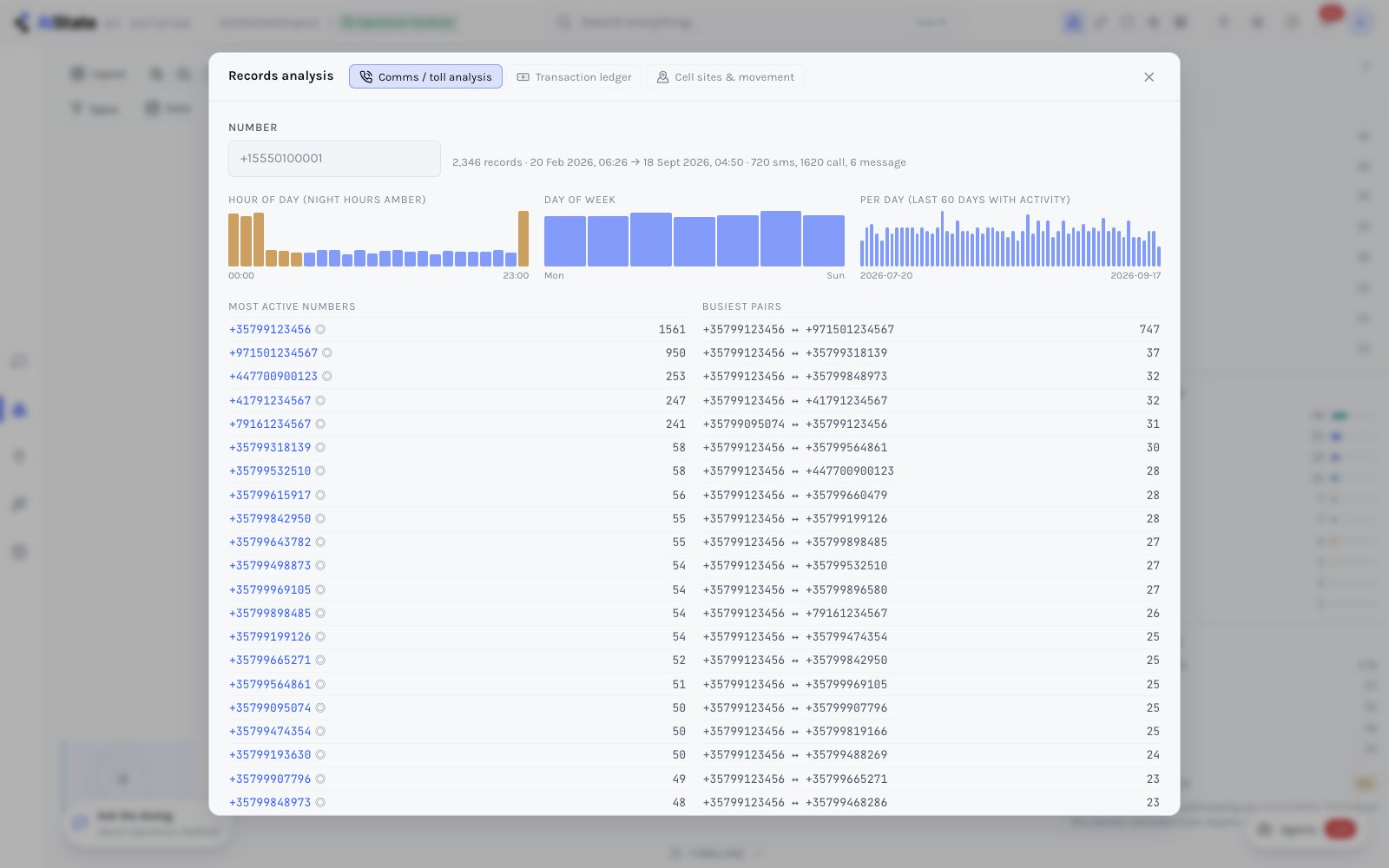
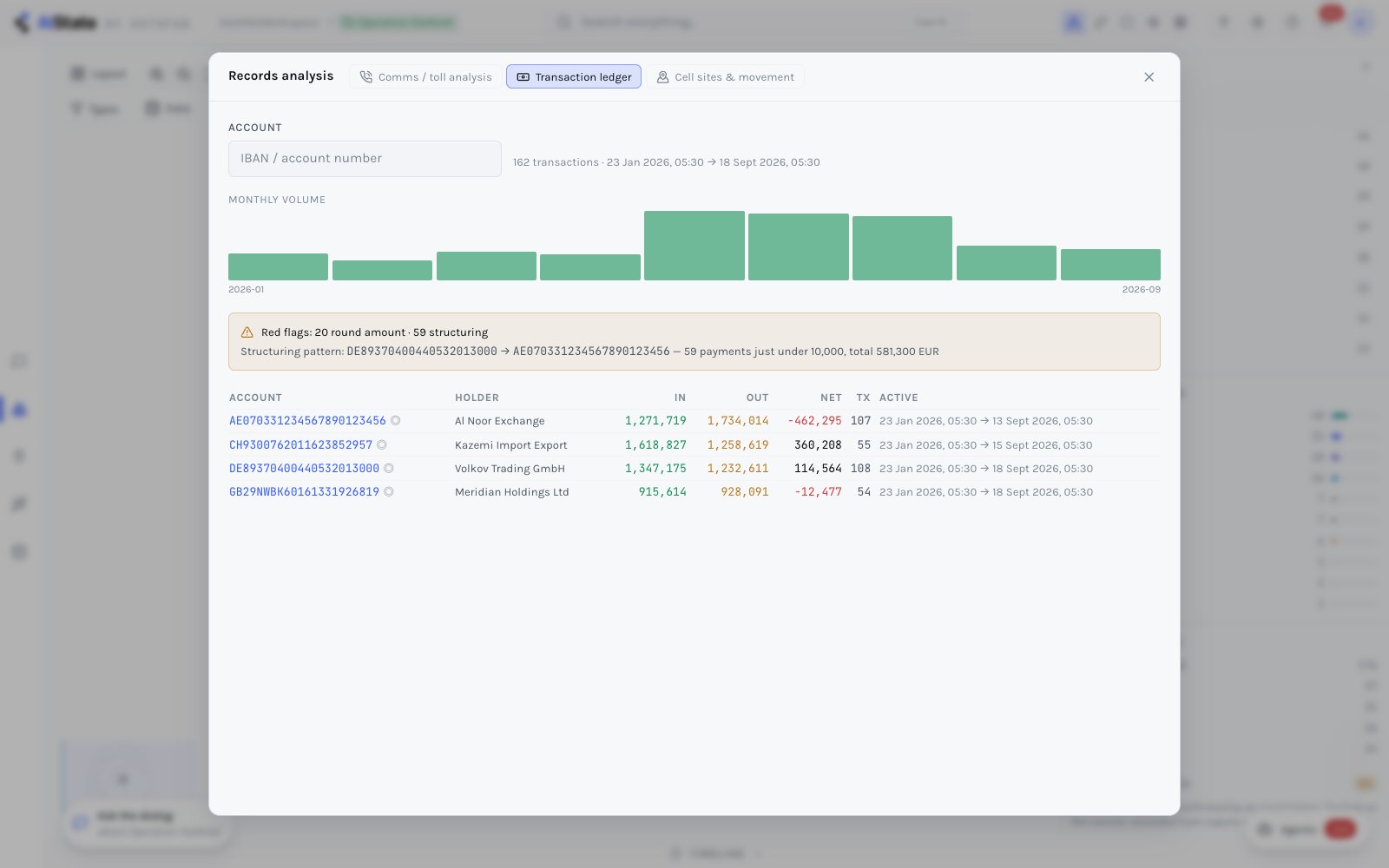
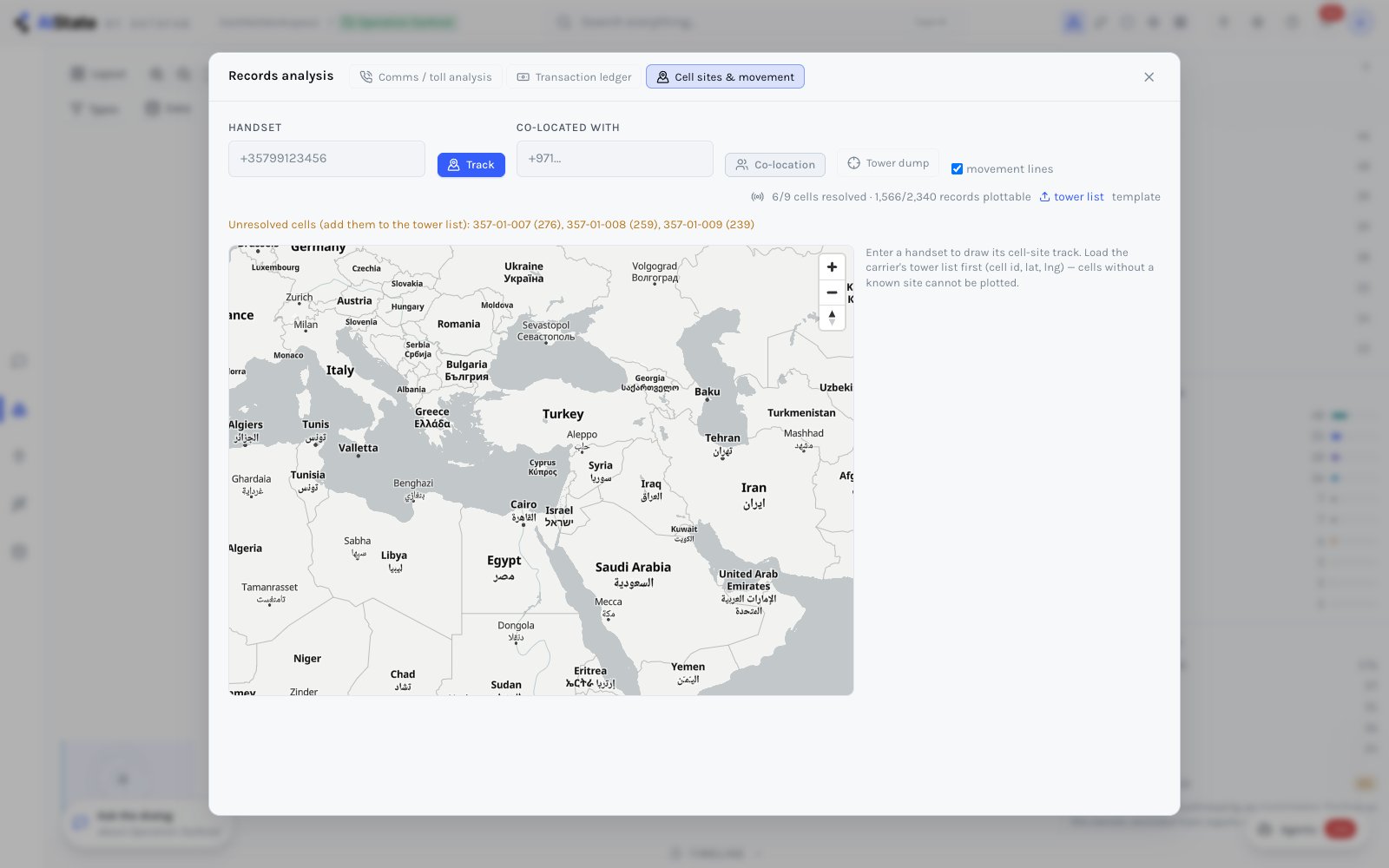
Call detail records, bank returns, device extractions, chat exports and cyber logs are imported with the profile and column mapping detected for you, dry-run first, merged into the graph as entities and aggregated relationships — and kept, row by row, so the analysis is on the records themselves rather than a summary of them. One click undoes an import.


Subjects with roles, evidence with chain of custody, regulatory reports with derived deadlines, tasks, recoveries and holds, restricted sources, indicators, registers, whiteboards, meetings and email — one case file, every mutation an audit entry hash-chained to the last, reads included.
Cases in the feature guide → · ▶ A case worked start to finish
Each stage against market-standard cost.
Weeks, not quarters — read in place, with no migration programme.
Your people and your partner compose it. No standing team of vendor engineers.
Depending on volume — the agencies carry the work, people take the decisions.
Systems of record were never touched. Export the identity layer, policy, decisions and audit trail.
Illustrative. Run reduction varies with volume; every figure is validated against your own estate in the proof of value.
Every capability a named permission; custom roles on a base ladder; clearance and case grants gate every record; a restricted case is a 404 to everyone else.
Agencies act within policy. Where you reserve a decision, they propose, and a reviewer accepts or rolls back; closing, unsealing, disclosure and asset decisions need a second person; every decision carries a name and a basis.
Every model provider is located — commercial, government, on-premises — and a feature can only be served inside the boundary you configure.
Hash-chained audit anchored daily, immutable originals, encryption at rest, integrity verified on every download.
MFA, SSO for Google, Microsoft Entra, Okta and generic OIDC, claim mappings, scoped API keys, session lock, access review, security events.
The NIST 800-53 control baseline assessed against your deployment on every load, with the actions that close each gap and a package a reviewer can take away.